Art Deco Peacock Design Review for Business Merch
As an embroidery designer who has spent years digitizing and testing files for commercial use, I approach every new machine embroidery design with a critical eye. It is not just about whether the image looks pretty on a screen; it is about how that digital embroidery file translates into a tangible asset for a small business. Recently, I evaluated the Art Deco Peacock Design, a piece categorized under Birds, to determine its viability for branded merchandise. My goal was to see if this design could serve as a robust element for brand identity across various applications like patches, uniforms, and retail goods.
First Impressions: Elegance Meets Commercial Viability
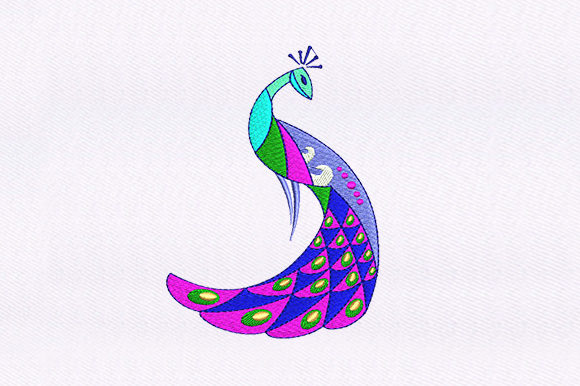
The moment I loaded the Art Deco Peacock Design into my editing software, the visual personality stood out immediately. Unlike rustic or overly playful motifs often found in the craft market, this design exudes a sense of premium elegance and modern classicism. The geometric lines typical of the Art Deco style suggest a brand that values sophistication and attention to detail. For a boutique owner, a high-end café, or a creative studio, this aesthetic is invaluable. It does not scream "handmade" in a chaotic way; rather, it whispers "curated" and "professional."
The structure of the peacock, rendered through stylized feathers and bold outlines, offers a strong silhouette. This is crucial for small business merch because logos need to be recognizable even from a distance or when scaled down. The design feels decorative yet grounded, making it suitable for businesses that want to elevate their perceived value without appearing stuffy. It strikes a balance between artistic flair and corporate readiness.
Real-World Applications for Small Business Branding
In a real-world scenario, imagine a local florist or a specialty bakery looking to upgrade their staff uniforms. The Art Deco Peacock Design works exceptionally well as a chest logo accent on work shirts or as a focal point on an apron. When applied as apron embroidery, the intricate feather details can catch the light, adding a touch of luxury to the customer service experience. Similarly, for a pet brand or a boutique hotel, this design serves as an excellent candidate for an embroidered patch. Patches are versatile; they can be sewn onto tote bags, caps, or even product packaging accents to create a cohesive look.
For Etsy sellers and craft business owners, integrating this motif into custom apparel can differentiate their products in a crowded marketplace. Whether it is a limited edition run of t-shirts or a signature line of canvas totes, the tote bag design potential here is significant. The bold lines of the Art Deco style hold up well against the texture of canvas or denim. Furthermore, using this design on customer gifts or event merch can enhance buyer engagement. When a customer receives a item featuring such a distinct and high-quality emblem, it reinforces their trust in the brand's professionalism.
Technical Considerations for Production
While the aesthetic appeal is high, a professional review must address the technical execution. The Art Deco Peacock Design comes in a wide array of embroidery file formats, including DST, PES, EXP, JEF, and XXX, among others. This compatibility is a major plus for shops running different brands of machines. However, before committing to a large production run, there are several factors to consider regarding stitch density and fabric interaction.
One must be cautious when applying this design to curved surfaces, such as the front of a cap. Cap embroidery requires careful hooping and often a specific backing to prevent distortion. The geometric precision of Art Deco can suffer if the fabric shifts, leading to misaligned lines that break the visual harmony. Additionally, if you plan to use this on dark uniforms, you must review the thread colors included in the file. Does the design rely on light threads that might require an underlay of white to pop against black fabric? Testing on the actual fabric texture you intend to use is non-negotiable.
Another critical area is size. If you intend to use this as a small patch or a sleeve detail, you must verify if the fine details of the peacock feathers remain clear at a reduced scale. High stitch density in small areas can lead to thread bunching or needle breaks. It is advisable to test the design in black and white first to ensure the contrast holds up without relying on color differentiation. Always confirm the appropriate hoop size required for the specific version of the file you download, as resizing a design beyond its intended limits can compromise the finished product.
Impact on Brand Identity and Customer Perception
The choice of imagery directly influences how customers perceive a brand. Utilizing the Art Deco Peacock Design signals a commitment to quality and style. In the context of commercial embroidery, consistency is key. If this design is used across all design assets—from employee badges to shopping bags—it creates a unified visual language. This consistency builds recognition. A customer seeing that distinctive peacock on an apron and then again on a tote bag instantly connects the two experiences, reinforcing brand recall.
Moreover, the perceived value of the handmade product increases when the branding looks expensive. A poorly executed or generic logo can make a high-quality item feel cheap. Conversely, a sharp, well-digitized Art Deco motif elevates the entire presentation. It tells the customer that the business cares about the details, which fosters trust. For product designers creating printable mockups for client approval, this design offers a sophisticated placeholder that helps clients visualize a premium end result.
Final Designer Notes and Best Practices
Before integrating the Art Deco Peacock Design into your inventory, I recommend a rigorous testing protocol. First, create a printable mockup to show clients or stakeholders how the design sits on different garments. Second, always use the proper stabilizer for your specific fabric type; a cut-away stabilizer is often best for items that will undergo frequent washing, ensuring the design does not pucker over time. Third, compare this design beside your other existing assets to ensure it complements rather than clashes with your current branding palette.
Finally, and perhaps most importantly, confirm the commercial licensing terms before using this for business purposes. While the file formats provided (such as ART, CND, DSB, DSZ, HUS, PCS, PEC, TAP, VIP, VP3) offer great flexibility, the legal right to use the design for profit is a separate matter. Ensure you have the clearance to use this for small business merch and client projects. By taking these precautions, the Art Deco Peacock Design can become a cornerstone of your branding strategy, delivering both beauty and business value.