Baby Blue Whale: A Pro Review for Branded Merch
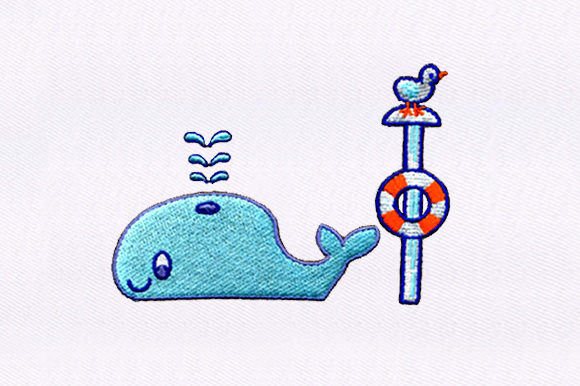
As an embroidery designer who has spent years digitizing and stitching for small businesses, I approach every new machine embroidery design with a critical eye. It is not just about whether the image looks cute on a screen; it is about how that digital embroidery file translates into a tangible asset for a brand. Today, I am reviewing the Baby Blue Whale, a design categorized under Fish, to determine its viability for commercial embroidery projects, branded patches, and small business merch.
The first impression of the Baby Blue Whale is one of approachable professionalism. The title suggests a palette that is soft yet distinct, likely leaning towards a friendly and playful aesthetic without sacrificing clarity. For boutique owners, creative studios, or pet brands, this visual personality is gold. It strikes a balance between a handmade product feel and a polished, modern look. When you are building a brand identity, you need assets that evoke trust and warmth, and a whale motif often symbolizes depth, community, and gentle strength. This design appears poised to deliver that message effectively across various mediums.
Real-World Application for Small Business Owners
Let's move beyond theory and discuss where the Baby Blue Whale actually shines in a commercial setting. Imagine a local café near the coast or a bakery with an ocean-themed interior. Using this design as an apron embroidery detail instantly elevates the staff uniform from generic workwear to a cohesive part of the customer experience. It acts as a subtle conversation starter, reinforcing the shop's theme without being overwhelming.
For Etsy sellers and crafters, the versatility of this embroidery file is a major selling point. Because the design comes in a comprehensive list of formats—including DST, PES, EXP, JEF, and VIP—it is compatible with almost any industrial or home embroidery machine. This means you can scale production easily. You could apply the Baby Blue Whale to tote bags as a tote bag design for shoppers, creating a reusable marketing tool that customers actually want to carry. The simplicity of the subject matter ensures it remains recognizable even when scaled down for a chest logo accent on a work shirt or a sleeve detail on a hoodie.
Furthermore, this design is an excellent candidate for embroidered patch production. Patches are currently a huge trend in custom apparel and accessories. A well-stitched whale patch can be sold as a standalone product or used to upgrade a plain cap or backpack. For event merch, such as a beach cleanup or a family reunion, this design offers a unifying symbol that feels inclusive and fun. The key here is that the Baby Blue Whale does not feel like clip art; when stitched correctly, it feels like a deliberate design asset that adds value to the finished product.
Technical Considerations and Placement Strategy
While the aesthetic potential is high, a professional review must address the technical challenges. Not every surface is suitable for every design. When planning to use the Baby Blue Whale, you must consider stitch density. If the design relies heavily on satin stitches to create the blue tones, placing it on a curved surface like a cap embroidery project requires careful hooping and potentially a lighter density to prevent puckering. Caps are unforgiving; if the stitch count is too high for the fabric structure, the design will warp.
You must also be cautious with fabric texture. This design will look crisp on twill, denim, or canvas, which are standard for patches and bags. However, if you attempt to stitch it on a highly textured fleece or a loose-knit sweater, the fine details of the whale's features might get lost. For dark uniforms, ensure that the thread colors provided in the design offer sufficient contrast. A baby blue might disappear against a navy background unless there is a defined outline or a lighter underlay strategy employed by the digitizer.
Another critical factor is size. If you intend to use this as a tiny label on product packaging accents or a small tag on a garment, you need to verify the minimum viable size. Intricate outlines can merge together if the design is shrunk too small. Always request a printable mockup at the actual intended size before committing to a large production run. This allows you to visualize how the thread colors interact at a distance and up close.
Impact on Brand Identity and Customer Trust
Consistency is the cornerstone of brand recognition. Using the Baby Blue Whale across multiple touchpoints—from staff uniforms to customer gifts—creates a visual language that customers begin to associate with your quality and values. A professionally executed embroidery job signals attention to detail. When a customer sees a clean, well-defined whale on a tote bag, they subconsciously transfer that perception of quality to your core products or services.
For handmade brands, this design supports the narrative of craftsmanship. Unlike a heat transfer or a screen print that can peel or crack, a high-quality machine embroidery design withstands frequent washing and wear. This durability enhances the perceived value of the item. If you are selling these as merchandise, the longevity of the stitch work justifies a higher price point. It tells the buyer that this is a premium item, not a disposable promotional giveaway. This distinction is vital for maintaining buyer engagement and fostering loyalty.
Essential Designer Notes for Production
Before you load this file into your machine for a client order, there are several practical steps you must take to ensure success. First, test the design in black and white or grayscale. This helps you evaluate the contrast and definition of the shapes without the distraction of color. If the design holds up in monochrome, it will likely translate well to colored threads.
Second, always check the hoop size requirements. While the file formats listed (such as ART, CND, DSB, DSZ, HUS, PCS, PEC, TAP, VP3, XXX, and 10O) suggest broad compatibility, the physical dimensions of the design must fit your specific hoop. Do not assume it fits a standard 4x4 hoop without measuring. Third, select the appropriate stabilizer. For stretchy fabrics like t-shirts, a cut-away stabilizer is often necessary to support the weight of the whale design over time. For woven fabrics like twill patches, a tear-away might suffice, but testing is non-negotiable.
Finally, confirm the commercial licensing terms. Just because a file is available for purchase does not automatically grant unlimited rights for resale of the stitched items. Ensure you have the clearance to use the Baby Blue Whale for commercial embroidery projects. Compare this design beside your other design assets to ensure it complements your existing portfolio rather than clashing with it. By taking these precautions, you transform a simple digital file into a reliable revenue stream for your business.
In conclusion, the Baby Blue Whale represents a versatile and charming option for small business owners looking to expand their branded merchandise. With its friendly aesthetic and broad format compatibility, it is well-suited for patches, apparel, and accessories. However, its success depends entirely on thoughtful application, proper material selection, and rigorous testing. Treat this design not just as an image, but as a strategic tool for enhancing your brand's physical presence.